The Challenge
The Stratford campus is geographically separated from the main campus, and many students live in Waterloo. Without a central community hub, events, carpooling, and social opportunities were easy to miss.
Product design / Campus community platform
A campus community platform designed to help University of Waterloo Stratford students discover events, coordinate transportation, and find like-minded communities without relying on scattered informal channels.

Case Study
Connect U responds to a specific community problem: people wanted to participate, but activity information and transportation coordination were spread across too many informal channels.
The Stratford campus is geographically separated from the main campus, and many students live in Waterloo. Without a central community hub, events, carpooling, and social opportunities were easy to miss.
We moved from broad campus research into a focused event discovery flow, then tested whether users could find, search, create, and join relevant community activities.
The core issue was not a lack of activity. It was that information was too dispersed across group chats, Facebook, program channels, and personal friend networks. The product needed to collect scattered signals into one searchable campus layer.
The final prototype turned an abstract need for connection into clearer actions: browse events, post activities, search transportation options, and understand what was happening across the campus community.
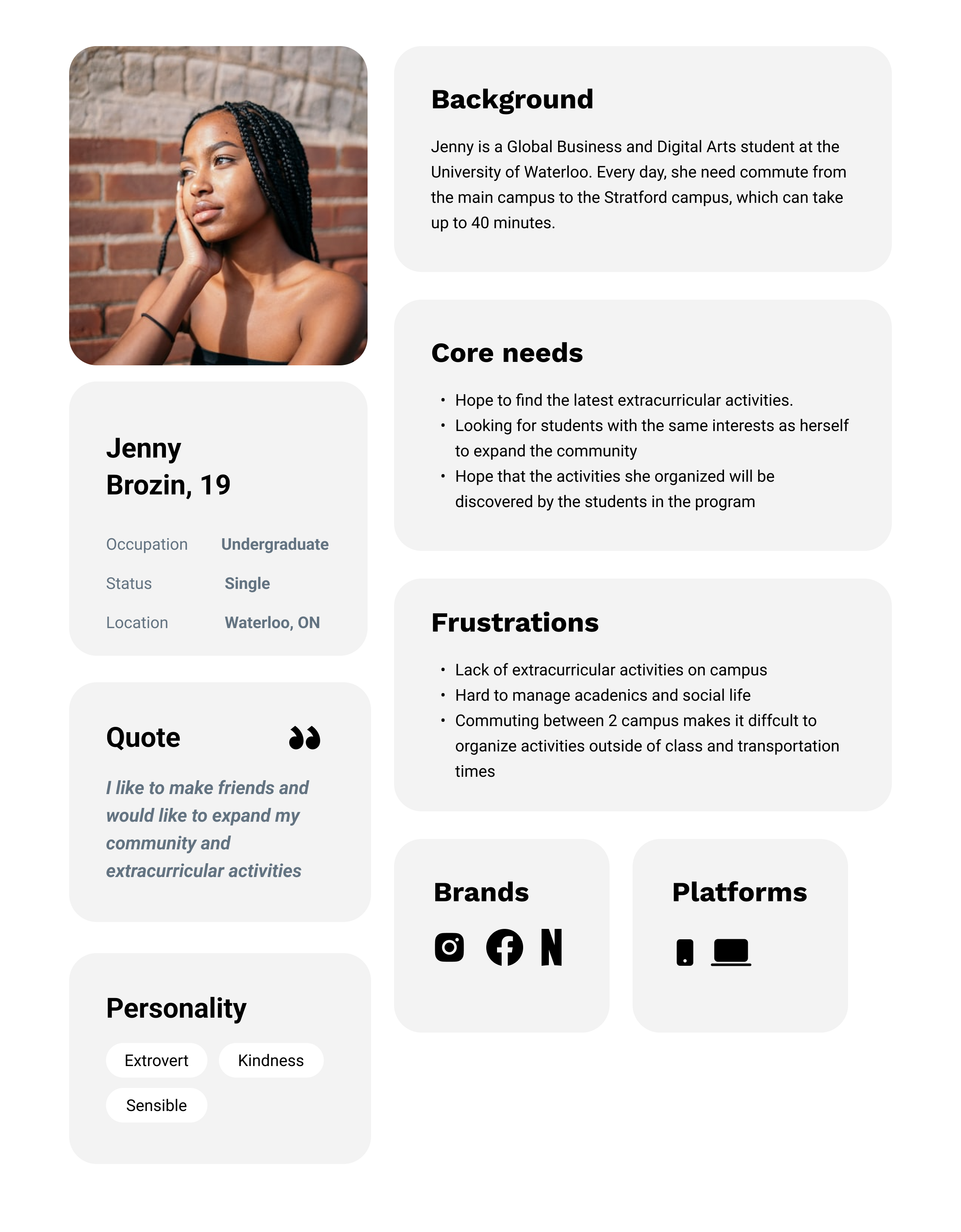
The University of Waterloo Stratford campus serves GBDA and MDEI students, but it sits away from the main Waterloo campus. Many students chose to live in Waterloo because it was easier to stay socially connected, even though commuting made daily life harder.
Our survey included 14 GBDA students, 6 MDEI students, and 5 instructors or staff members. The research highlighted a pattern: users wanted community, but the practical path to finding activities and transportation was fragmented.
I was responsible for the Events feature section. I created task flows, explored low-fidelity wireframes, designed high-fidelity screens, and translated research pain points into a product path from browsing to joining an event.
Research to Interface
The strongest case evidence is the transition from campus pain points to a specific event discovery and participation flow.



What Changed
What started as a general need for connection became something much more concrete: search, browse, post, join, and coordinate.
Events and carpool posts moved from scattered channels into one place users could intentionally check.
Clear event context helped users understand what an activity was and whether it felt relevant to them.
The project taught me that community problems are often information problems first. Users did not lack interest; they lacked one visible, intentional place to understand what was available and how to join it.
Next Case
An accessibility-focused project helping visually impaired users track and organize receipts.
View Re: Seed